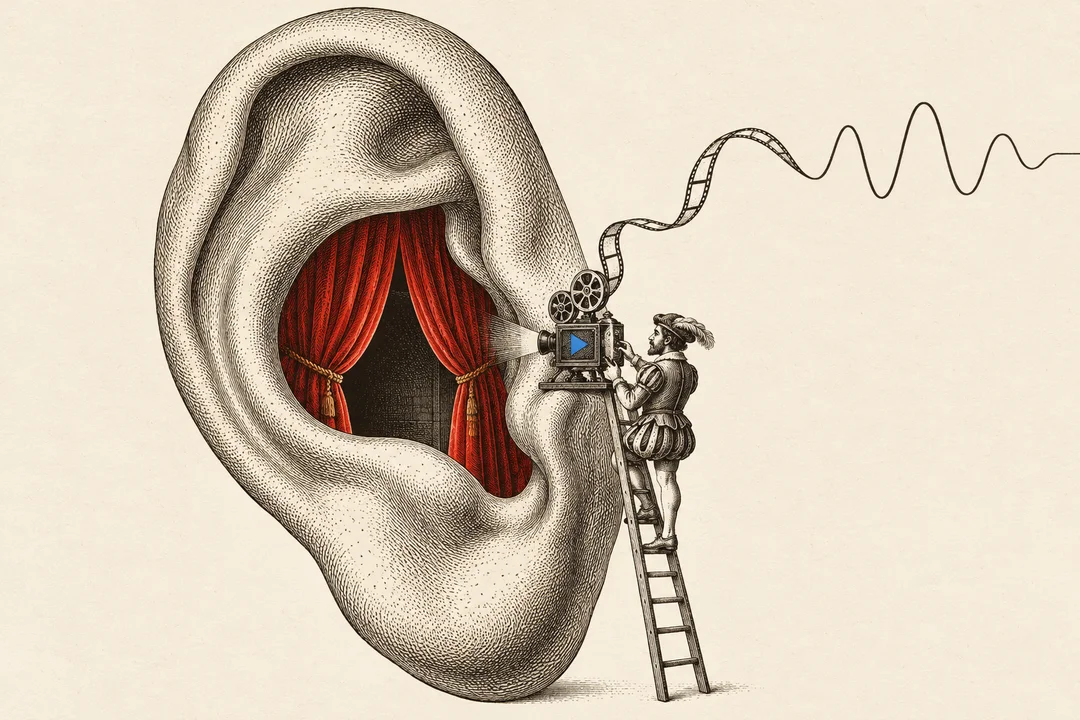
Text has a useful property: you can choose not to read it. Skim it, catch a few words, decide whether to stop. A voice message offers much less. Until you press Play, it is almost an opaque object.
In 2026 I found myself wanting a voice-message summariser. My reason was specific: it was not that I did not want to listen to Artemy’s message. I did not yet know whether I wanted to. I needed a preview.1
Six years earlier, I had been thinking about voice-message transcription in VK. Voice messages suit the sender: you can talk on the move without requiring an immediate answer, as a call would. The recipient has a different set of circumstances: headphones, other people nearby, time and the ability to listen. Transcription helps the two sides meet.2
A useful feature can still land in the wrong workflow. Suppose someone records a message, gets a transcript, edits it and sends the text. Congratulations: you have invented dictation.3
A preview answers a different question. Show me what the recording is about before I commit several minutes to it. I may then decide that I would very much like to hear the voice.
Footnotes
-
My discussion of voice messages and transcription, 2020. This is a historical account of a use case, not a comparison of current messengers. ↩